Printing 101 · 2 August 2026 · 6 min read
How Offset Printing Was Born — and Why It Still Rules the Press Room
From carved woodblocks to a happy accident with a rubber blanket — the surprising story of offset printing, told simply for anyone who has ever wondered how books, boxes and magazines are really made.
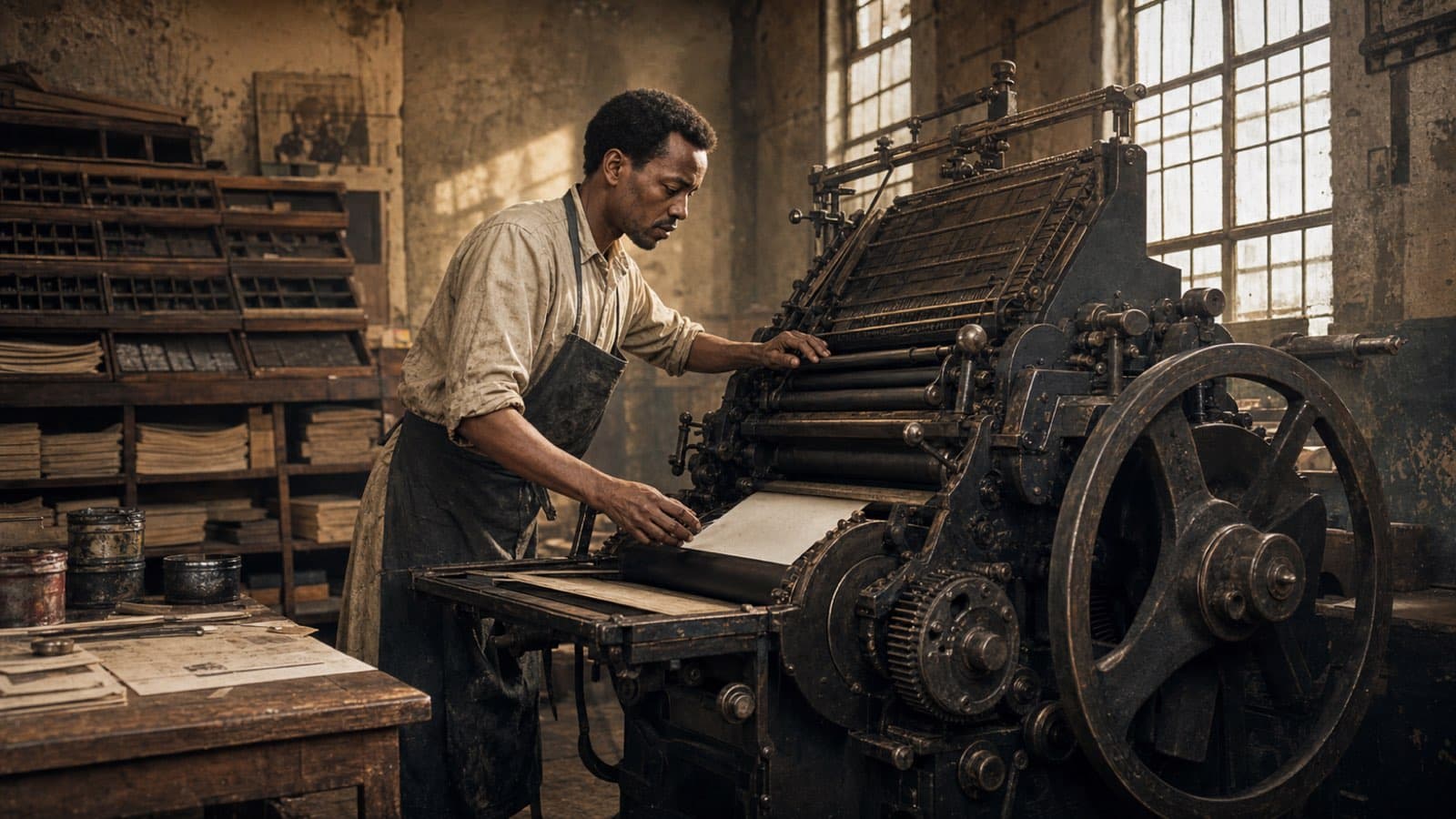
A letterpress in full swing — the raised-metal-type era that offset printing would later surpass.
Look around you. The book on the shelf, the cereal box in the kitchen, the magazine on the table, the label on a bottle — for over a century, almost all of it came off a machine called an offset press. Yet offset printing was born, quite literally, by accident. Here is its story — from a knife carving letters into wood, to the modern presses we run every day.
It started in the East
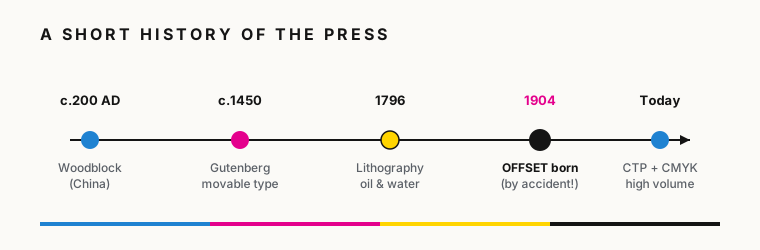
Long before Europe, printing was invented in Asia. Chinese craftsmen were carving whole pages into wooden blocks, inking them and pressing paper on top, well over a thousand years ago. Around 1040, a man named Bi Sheng made individual movable characters from clay, and Korean printers were casting type in metal by the 1370s. The idea of printing was already old when the West caught up.
Gutenberg changes everything (around 1450)
In Germany, Johannes Gutenberg combined metal movable type, oil-based ink and a wooden press into one system — and suddenly a book that once took a scribe months could be printed in days. Knowledge spread across the world. But Gutenberg’s method was relief printing: raised metal letters, inked and pressed hard into the paper. Brilliant for text, but clumsy for pictures, slow for big runs, and the metal type wore down.
A chemist’s trick: oil and water (1796)
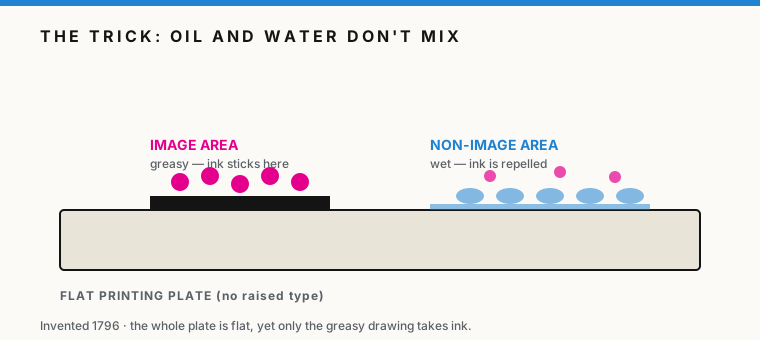
The next leap came from a playwright, not a printer. Trying to cheaply print his own scripts, Bavaria’s Alois Senefelder discovered you could print from a perfectly flat stone using one simple fact of nature: oil and water don’t mix. Draw your image in grease, wet the stone, then roll on ink — the ink clings to the greasy drawing and slides off the wet blank areas. He called it lithography (‘stone writing’). For the first time, images and text flowed as freely as a pencil.
The happy accident that made offset (1904)
Now the twist. In 1904, American printer Ira Rubel was running a lithographic press when a sheet of paper failed to feed. The image printed instead onto the rubber-covered cylinder underneath — and then stamped itself onto the back of the next sheet. To Rubel’s surprise, that accidental, rubber-transferred image was sharper and cleaner than the normal print. The lesson was obvious: don’t press the plate straight onto paper — go plate → rubber blanket → paper. Because the image is offset (transferred) through rubber, the method was named offset printing.
So how does an offset press actually work?
It combines Senefelder’s oil-and-water trick with Rubel’s rubber blanket. A thin aluminium plate carries your image: the image areas are treated to love ink and repel water, while the blank areas hold a film of water and repel ink. On the press, one set of rollers wets the plate, another inks it — so ink sticks only to the image. The plate then rolls its image onto a soft rubber blanket, and the blanket presses it onto the paper. The rubber is the secret: it hugs the paper’s texture for a crisp result and protects the delicate plate so it lasts far longer.
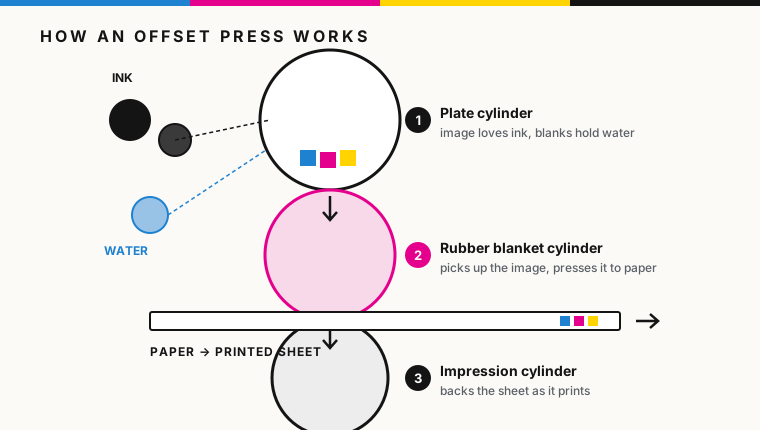
And colour? Full-colour printing simply repeats this four times, with four plates — Cyan, Magenta, Yellow and Black (CMYK). Laid down in perfect alignment, those four inks build every shade in a photograph. It’s the same four-colour logic behind the coloured bar you’ll see across this page.
From newspapers to your business cards
Through the 20th century, offset took over the world’s printing. It comes in two flavours: sheet-fed offset, which prints cut sheets for things like brochures, books and packaging; and web offset, which runs paper off giant rolls at breathtaking speed for newspapers and magazines. In the 1990s, computer-to-plate (CTP) removed film from the process entirely — your design now goes straight from screen to plate.
Why offset still rules
With all today’s digital wizardry, why does century-old offset still dominate? Volume and consistency. Once the plates are made, each extra sheet is remarkably cheap, and the colour stays identical from the first sheet to the hundred-thousandth. For books, packaging, magazines and long runs of brochures, nothing else comes close on cost and quality.
Offset, in-house, in Addis Ababa
ADP runs offset presses for exactly this kind of work — high-volume, colour-critical jobs printed and finished under one roof: books, packaging, brochures and more.
Of course, offset isn’t the whole story. For short runs, personalization and same-day jobs, a newer technology has changed the game — digital printing. That’s the next chapter, and we’ll tell its story soon. Until then, if you’re planning a book, a catalogue or a big print run, tell us what you need — we’ll press it beautifully.
ዙሪያዎን ይመልከቱ። በመደርደሪያው ላይ ያለው መጽሐፍ፣ በኩሽናው ውስጥ ያለው የሳጥን ማሸጊያ፣ በጠረጴዛው ላይ ያለው መጽሔት፣ በጠርሙስ ላይ ያለው ሌብል — ከመቶ ዓመት በላይ፣ ሁሉም ማለት ይቻላል ኦፍሴት ፕሬስ ከሚባል ማሽን ነው የወጣው። ሆኖም የኦፍሴት ህትመት የተወለደው በአጋጣሚ ነው። ይህ ታሪኩ ነው — ፊደላትን በእንጨት ላይ ከመቅረጽ ጀምሮ እስከ ዛሬ በየቀኑ እስከምናንቀሳቅሳቸው ዘመናዊ ፕሬሶች ድረስ።
ጅማሬው ከምሥራቅ ነው
ከአውሮፓ ከረጅም ጊዜ በፊት፣ ህትመት በእስያ ተፈጠረ። የቻይና ባለሙያዎች ከሺህ ዓመታት በፊት ሙሉ ገጾችን በእንጨት ብሎኮች ላይ ቀርጸው፣ ቀለም ቀብተው በወረቀት ላይ ይጫኑ ነበር። በ1040 አካባቢ ቢ ሼንግ የተባለ ሰው ከሸክላ የተሠሩ ተንቀሳቃሽ ፊደላት ሠራ፤ በ1370ዎቹ ደግሞ የኮሪያ አታሚዎች ፊደላትን ከብረት ያፈሱ ነበር። ምዕራቡ ዓለም ሲደርስ የህትመት ሐሳብ ቀድሞውኑ አርጅቶ ነበር።
ጉተንበርግ ሁሉንም ይለውጣል (1450 አካባቢ)
በጀርመን፣ ዮሐንስ ጉተንበርግ የብረት ተንቀሳቃሽ ፊደላትን፣ ዘይት-ተኮር ቀለምንና የእንጨት ፕሬስን ወደ አንድ ሥርዓት አዋሐደ — በዚህም አንድ ጸሐፊ ወራትን የሚወስድበት መጽሐፍ በቀናት ውስጥ መታተም ጀመረ። እውቀት በዓለም ዙሪያ ተስፋፋ። ነገር ግን የጉተንበርግ ዘዴ ከፍ ያለ (relief) ህትመት ነበር፦ ከፍ ያሉ የብረት ፊደላት ቀለም ተቀብተው በወረቀት ላይ በኃይል ይጫናሉ። ለጽሑፍ በጣም ጥሩ፣ ለምስሎች ግን አስቸጋሪ፣ ለብዙ ቅጂም ዝግተኛ ነበር፤ የብረት ፊደላቱም ያልቁ ነበር።
የኬሚስት ብልሃት፦ ዘይትና ውሃ (1796)
ቀጣዩ ትልቅ ዝላይ የመጣው ከአታሚ ሳይሆን ከፀሐፌ ተውኔት ነው። የራሱን ስክሪፕቶች በርካሽ ለማተም ሲሞክር፣ የባቫሪያው አሎይስ ዜነፌልደር አንድ ቀላል የተፈጥሮ ሕግ በመጠቀም ከፍጹም ጠፍጣፋ ድንጋይ ላይ ማተም እንደሚቻል አገኘ፦ ዘይትና ውሃ አይቀላቀሉም። ምስልዎን በቅባት ይሳሉ፣ ድንጋዩን ያርጥቡ፣ ከዚያ ቀለም ያንከባልሉ — ቀለሙ በቅባቱ ስዕል ላይ ይጣበቃል፣ በእርጥቡ ባዶ ቦታ ላይ ግን ይንሸራተታል። ይህንን ሊቶግራፊ (‘በድንጋይ መጻፍ’) ብሎ ሰየመው። ለመጀመሪያ ጊዜ ምስሎችና ጽሑፍ እንደ እርሳስ በነፃነት መፍሰስ ጀመሩ።
ኦፍሴትን የፈጠረው አጋጣሚ (1904)
አሁን ወደ አስገራሚው ክፍል። በ1904፣ አሜሪካዊው አታሚ አይራ ሩበል የሊቶግራፊ ፕሬስ እያንቀሳቀሰ ሳለ አንድ ወረቀት በአግባቡ አልገባም። ምስሉ በምትኩ ከታች ባለው በጎማ በተሸፈነው ሲሊንደር ላይ ታተመ — ከዚያም በሚቀጥለው ወረቀት ጀርባ ላይ ተለጠፈ። ሩበልን ባስገረመ ሁኔታ፣ ያ በአጋጣሚ በጎማ የተላለፈው ምስል ከመደበኛው ህትመት የበለጠ ሹልና ንጹህ ነበር። ትምህርቱ ግልጽ ነበር፦ ፕሌቱን በቀጥታ ወደ ወረቀት አትጫን — ከፕሌት → ወደ ጎማ ብላንኬት → ወደ ወረቀት ሂድ። ምስሉ በጎማ በኩል ስለሚተላለፍ (offset)፣ ዘዴው ኦፍሴት ህትመት ተባለ።
ታዲያ የኦፍሴት ፕሬስ እንዴት ነው የሚሠራው?
የዜነፌልደርን የዘይትና ውሃ ብልሃት ከሩበል የጎማ ብላንኬት ጋር ያዋህዳል። ቀጭን የአሉሚኒየም ፕሌት ምስልዎን ይይዛል፦ የምስሉ ክፍሎች ቀለምን እንዲወዱና ውሃን እንዲገፉ ተደርገዋል፣ ባዶ ቦታዎቹ ደግሞ የውሃ ሽፋን ይይዛሉ፣ ቀለምንም ይገፋሉ። በፕሬሱ ላይ አንድ የሮለሮች ስብስብ ፕሌቱን ያረጥባል፣ ሌላው ቀለም ይቀባል — ስለዚህ ቀለም በምስሉ ላይ ብቻ ይጣበቃል። ከዚያ ፕሌቱ ምስሉን በለስላሳ ጎማ ብላንኬት ላይ ያንከባልላል፣ ብላንኬቱም በወረቀት ላይ ይጫነዋል። ጎማው ነው ምስጢሩ፦ የወረቀቱን ገጽታ አቅፎ ሹል ውጤት ይሰጣል፣ ስስ የሆነውን ፕሌት ስለሚጠብቅም ረጅም ዕድሜ እንዲኖረው ያደርጋል።
ቀለምስ? ሙሉ-ቀለም ህትመት ይህንኑ አራት ጊዜ በአራት ፕሌቶች ይደግማል — ሳያን፣ ማጀንታ፣ ቢጫና ጥቁር (CMYK)። እነዚህ አራት ቀለማት በትክክል ተሰልፈው በፎቶግራፍ ውስጥ ያለውን እያንዳንዱን ቀለም ይገነባሉ። በዚህ ገጽ ላይ የሚታየው ባለቀለም መስመርም ከዚሁ ከአራት-ቀለም አሠራር የመጣ ነው።
ከጋዜጣ እስከ ቢዝነስ ካርድዎ
በ20ኛው ክፍለ ዘመን፣ ኦፍሴት የዓለምን ህትመት ተቆጣጠረ። በሁለት ዓይነት ይመጣል፦ ሺት-ፌድ (sheet-fed) ኦፍሴት፣ ለብሮሹር፣ ለመጻሕፍትና ለማሸጊያ የተቆረጡ ወረቀቶችን ያትማል፤ እና ዌብ (web) ኦፍሴት፣ ለጋዜጣና ለመጽሔት ትላልቅ የወረቀት ጥቅልሎችን በአስደናቂ ፍጥነት ያሽከረክራል። በ1990ዎቹ፣ ኮምፒውተር-ቱ-ፕሌት (CTP) ፊልምን ሙሉ በሙሉ አስወገደ — ዲዛይንዎ አሁን ከስክሪን በቀጥታ ወደ ፕሌት ይሄዳል።
ኦፍሴት ዛሬም ለምን ነግሷል
ከዛሬው የዲጂታል ብልጠት ሁሉ ጋር፣ የመቶ ዓመቱ ኦፍሴት ለምን አሁንም ይመራል? ብዛትና ወጥነት። ፕሌቶቹ አንዴ ከተሠሩ በኋላ፣ እያንዳንዱ ተጨማሪ ወረቀት እጅግ ርካሽ ነው፣ ቀለሙም ከመጀመሪያው ወረቀት እስከ መቶ ሺኛው ወረቀት ድረስ ተመሳሳይ ሆኖ ይቆያል። ለመጻሕፍት፣ ለማሸጊያ፣ ለመጽሔትና ለብዙ ብሮሹር ህትመት፣ በዋጋና በጥራት ኦፍሴትን የሚደርስ የለም።
ኦፍሴት፣ በራሳችን ቤት፣ በአዲስ አበባ
ADP ለዚህ ዓይነት ሥራ — ብዙ ብዛት ያለውና ቀለም-ወሳኝ ሥራ — ኦፍሴት ፕሬሶችን ያንቀሳቅሳል፤ ሁሉንም በአንድ ቤት ውስጥ ታትሞ ተጠናቆ፦ መጻሕፍት፣ ማሸጊያ፣ ብሮሹርና ሌሎችም።
በእርግጥ ኦፍሴት ሙሉ ታሪኩ አይደለም። ለአነስተኛ ብዛት፣ ለግላዊ ማድረግ (personalization) እና ለዕለቱ ሥራ፣ አዲስ ቴክኖሎጂ ጨዋታውን ቀይሮታል — ዲጂታል ህትመት። ያ ቀጣዩ ምዕራፍ ነው፤ ብዙም ሳይቆይ ታሪኩን እናወጋዎታለን። እስከዚያው ድረስ፣ መጽሐፍ፣ ካታሎግ ወይም ትልቅ የህትመት ሥራ እያቀዱ ከሆነ፣ የሚፈልጉትን ይንገሩን — በውበት እናትመዋለን።